
 Assistant
ENTP
Debater
Enjoys exploring possibilities and developing new ideas through conversation, questions, and experimentation.
There is often more than one way to approach a problem
When you hear “We've always done it this way,” another route may immediately come to mind. You may not be eager to overturn the existing approach; you simply want to know whether changing an assumption could change the situation.
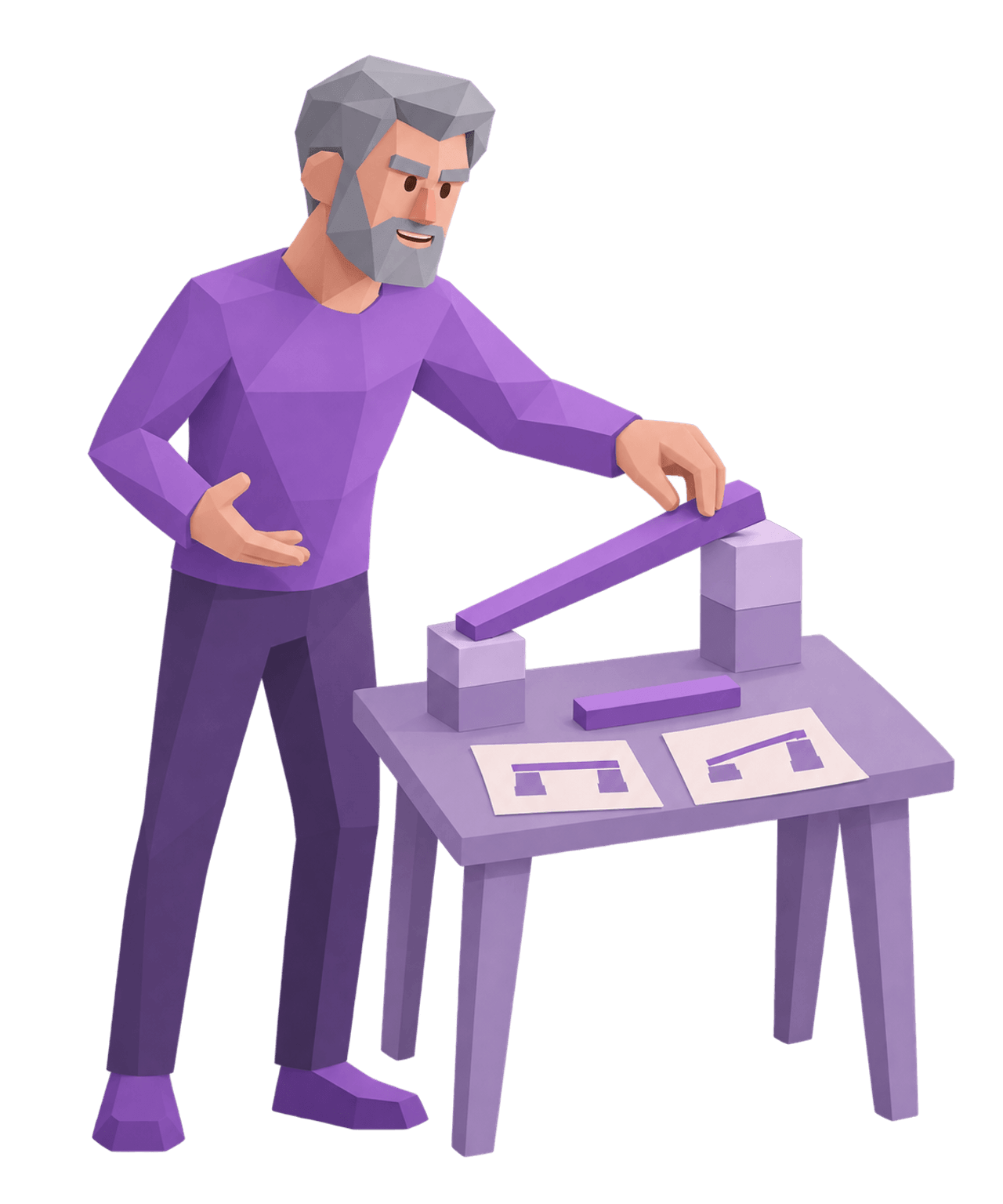
Imagine a team preparing to introduce a new service. While everyone else is editing the description, you suggest letting readers try a small prototype first. The discussion shifts from how to explain the service to how to let people experience it. New possibilities can be compelling, but they also need a chance to be tested.
ENTP combines preferences for Extraversion, Intuition, Thinking, and Perceiving. Within this framework, talking things through, connecting possibilities, comparing the logic of different ideas, and keeping options open can together form a way of exploring problems. This interpretation does not guarantee creativity or mean that someone must enjoy arguing.
| Letter | Preference meaning | What it can look like in everyday life |
|---|---|---|
| E Extraversion | Attention tends to turn naturally toward people and activities in the outside world | Developing ideas through questions, discussion, and interaction |
| N Intuition | Tends to notice connections, patterns, and possible directions first | Connecting existing information to generate different possible approaches |
| T Thinking | Tends to consider logic and consistent criteria first when making decisions | Checking whether an idea is internally consistent and under what conditions it applies |
| P Perceiving | Tends to prefer keeping options open and adapting flexibly to external arrangements | Being willing to try different paths and adjust as new discoveries emerge |
Combining familiar material in new ways
When someone presents an idea, you may immediately think of another explanation. You might even temporarily adopt a position different from your original one to see whether the argument still holds up. The other person's questions reveal new connections, and the idea changes through the exchange. Part of the enjoyment lies in seeing what seemed like a single path open into several possibilities.
This kind of exploration can be valuable when needs are still unclear. For example, a short demonstration might reveal that readers are actually confused about the steps involved, rather than concerned about how polished the description is. Testing different directions can help a team rethink the problem it needs to solve.
At the same time, distinguishing an interesting connection from an actionable suggestion makes it easier for others to contribute. You can clarify which ideas are simply part of brainstorming and which direction you recommend testing this week.
Choose one experiment to move a possibility forward
When new options keep appearing, narrowing the scope can feel like giving up good ideas. In practice, choosing one small experiment does not mean ruling out every other route forever. It gives an idea a chance to receive more concrete feedback.

Try comparing several approaches against the same criteria: what problem each aims to solve, what resources it requires, and what observations would make it worth pursuing. Then choose a small prototype you can complete with the resources available, keeping the other ideas on a shortlist.
Clear agreements can support organization and follow-through once the initial novelty fades. For example, finish a set of instructions that someone else can try before discussing ways to expand it. Steady progress also depends on task design and resources; it cannot simply be taken as evidence that a particular type has or lacks self-discipline.
Make your purpose clear when discussing ideas
You may offer a counterargument to examine a problem more fully, while someone else interprets it as opposition to an agreed decision. An unclear purpose can create more misunderstanding than a difference of opinion.
You could start by asking, “Are we exploring more options right now, or choosing one to put into practice?” If you are only checking for gaps, also explain what you support so that your questions are clearly distinguished from your position.
When a friend shares something upsetting, you do not need to offer another interpretation immediately. First check whether they want to be heard or would like help analyzing the situation, then decide how to contribute your thinking.
Learn how to check whether someone needs listening, advice, or practical support.
Comparing ENTP with INTP and ENFP
The comparisons below place the differing preferences in similar type codes into concrete situations. Consider your experiences across several settings as you read.
| Comparison | Preference difference | Comparison in context |
|---|---|---|
| ENTP and INTP | E/I: Natural focus of attention and ways of interacting and organizing thoughts | When considering a new idea, do you more naturally develop it through back-and-forth questions, or first work through a fuller explanation on your own before joining the discussion? |
| ENTP and ENFP | T/F: Whether decisions tend to start with logical criteria or with values and the impact on people | When you are interested in a new project, do you first examine how it would work and whether it meets consistent criteria, or whether it aligns with important values and people's needs? |
When a new project is proposed, one person may first examine its logic and operating conditions, while another first asks whether it aligns with important values and how it affects people. Both kinds of questions can play a role in the same person's decision.
Frequently asked questions
Do ENTPs always enjoy arguing?
No. Questioning ideas, enjoying conversation, and wanting to win an argument are not the same thing. How people express themselves can also change with experience and context.
Does having many interests mean I am an ENTP?
A wide range of interests can reflect curiosity, work demands, or a particular stage of life. Consider several preference pairs and recurring experiences rather than relying only on the number of interests you have.
How can I make my ideas easier for a team to use?
Identifying a specific problem, a method to try, and a completion criterion makes it easier to move forward together than continually adding new directions. This is a collaborative approach anyone can try, not an ability exclusive to one type.
How should I interpret it if only some of this description fits me?
A type cannot describe all of a person's experiences. Compare different settings, role expectations, and your actual choices. Keep what fits your experience, but also take the mismatches seriously. A single action is not enough to determine a type.
Is this site's test the official MBTI assessment?
This site provides its own 16-personality test and reports, not the official MBTI assessment. Even when tests use the same four-letter names, their questions, scoring, and interpretation methods may differ.
Start by observing one specific experience
Think back to a recent experience similar to the situations in this article, and try noting:
- Which assumption did my proposed direction actually change?
- Which possibility is most worth testing this week?
- Which ideas can I record for later without expanding the current task?
Choose one small action you can try, then adjust based on real feedback.
Explore the 16 personality types.
References
- The Myers-Briggs Foundation: The Four Preference Pairs
- The Myers-Briggs Company: Understanding Personality Preferences
- The Myers-Briggs Foundation: Introduction to the 16 Types


